
Anxiety Therapy: Which Treatment Works Best?
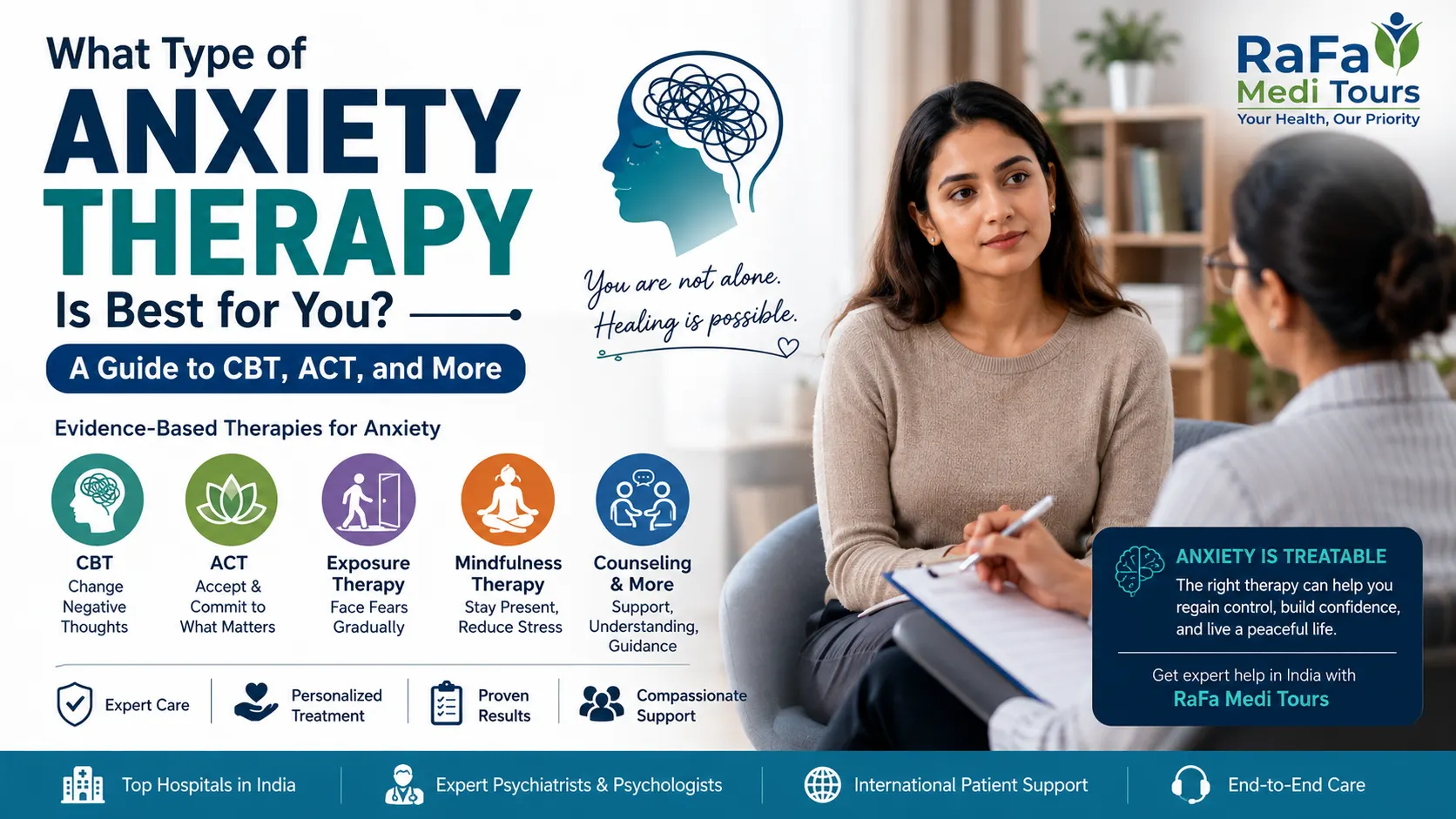
Anxiety Therapy: Which Treatment Works Best?
Anxiety Therapy: What Type of Therapy Is Best for Anxiety? A Guide to CBT, ACT
Quick Answer
Anxiety therapy is the most effective long-term treatment for many anxiety disorders. Cognitive Behavioral Therapy (CBT) is considered the gold standard, while Acceptance and Commitment Therapy (ACT), Exposure Therapy, and other evidence-based approaches are recommended depending on the individual's symptoms, diagnosis, and treatment goals.
Table of Contents
- What Is Anxiety?
- Types of Anxiety Disorders
- What Type of Therapy Is Best for Anxiety?
- CBT vs ACT vs Other Therapies
- Key Facts About Anxiety
- When Is Medication Recommended?
- Anxiety Treatment in India
- How RaFa Medi Tours Helps International Patients
- Frequently Asked Questions
- Conclusion
Introduction
Feeling anxious before an important event is normal. However, when anxiety becomes persistent, overwhelming, and begins affecting work, relationships, sleep, or daily life, it may indicate an anxiety disorder that deserves professional attention.
According to the World Health Organization (WHO), approximately 301 million people worldwide were living with an anxiety disorder in 2019, making it one of the most common mental health conditions globally. The encouraging news is that anxiety disorders are highly treatable, especially when evidence-based psychological therapies are used.
Many people searching online ask, "Which therapy is best for anxiety?" The answer isn't always the same for everyone. The right treatment depends on your symptoms, diagnosis, personal preferences, and overall health.
In this comprehensive guide, you'll learn how different therapies work, who they help most, and how RaFa Medi Tours connects international patients with experienced psychologists and psychiatrists in India's leading hospitals and mental health centers.
What Is Anxiety?
Direct Answer: Anxiety is your body's natural response to stress or perceived danger. It becomes an anxiety disorder when excessive fear or worry is persistent, difficult to control, and interferes with daily life.
Everyone experiences anxiety occasionally. It may appear before an exam, job interview, surgery, or major life event. However, clinical anxiety is more intense and lasts much longer.
Common symptoms include:
- Constant worrying
- Restlessness
- Racing thoughts
- Difficulty concentrating
- Rapid heartbeat
- Sweating
- Muscle tension
- Trouble sleeping
- Feeling overwhelmed
According to the National Institute of Mental Health (NIMH), anxiety disorders are among the most common mental illnesses, affecting millions of adults every year.
Hindi reassurance: "Aap akela nahi hain. Anxiety ek common aur treatable condition hai."
Types of Anxiety Disorders
Direct Answer: Anxiety is not a single condition. Mental health professionals diagnose different anxiety disorders based on symptoms, triggers, and duration.
Understanding the type of anxiety helps clinicians recommend the most effective therapy.
Generalized Anxiety Disorder (GAD)
People with GAD experience excessive worry about everyday situations, often without a clear reason.
Symptoms include:
- Constant worrying
- Fatigue
- Poor concentration
- Irritability
- Sleep problems
Panic Disorder
Panic disorder involves sudden episodes of intense fear known as panic attacks.
Symptoms may include:
- Chest pain
- Rapid heartbeat
- Shortness of breath
- Trembling
- Feeling of losing control
Many people mistake panic attacks for heart attacks.
Social Anxiety Disorder
Individuals experience overwhelming fear of being judged or embarrassed in social situations.
Examples include:
- Public speaking
- Meeting new people
- Eating in public
- Workplace presentations
Specific Phobias
These involve intense fear of a particular object or situation, such as:
- Flying
- Heights
- Needles
- Animals
- Enclosed spaces
Separation Anxiety Disorder
Although commonly associated with children, adults can also experience severe anxiety when separated from loved ones.
Health Anxiety
People become excessively worried about having serious illnesses despite medical reassurance.
Why Proper Diagnosis Matters
The American Psychological Association (APA) emphasizes that different anxiety disorders respond best to different therapeutic approaches. Accurate diagnosis allows clinicians to create personalized treatment plans that improve outcomes.
Key Facts About Anxiety
- Around 301 million people worldwide were living with anxiety disorders in 2019 (WHO).
- Cognitive Behavioral Therapy (CBT) is considered one of the most effective first-line psychological treatments for many anxiety disorders.
- Anxiety disorders are treatable, and many people experience significant improvement with therapy, medication, or a combination of both.
- Early intervention often leads to better recovery and improved quality of life.
- Internationally accredited hospitals in India offer comprehensive mental health care through multidisciplinary teams of psychologists and psychiatrists.
What Type of Therapy Is Best for Anxiety?
Direct Answer: There is no single therapy that is best for everyone. Cognitive Behavioral Therapy (CBT) has the strongest evidence for treating many anxiety disorders, while Acceptance and Commitment Therapy (ACT), Exposure Therapy, Mindfulness-Based Cognitive Therapy (MBCT), Dialectical Behavior Therapy (DBT), and other approaches may be recommended depending on your diagnosis and individual needs.
Modern mental health care focuses on personalized treatment. A licensed psychologist or psychiatrist evaluates your symptoms, lifestyle, medical history, and goals before recommending the most appropriate therapy.
In the following sections, we'll explore the most effective evidence-based therapies, how they work, and when each one is recommended.
Cognitive Behavioral Therapy (CBT): The Gold Standard for Anxiety
Direct Answer: Cognitive Behavioral Therapy (CBT) is widely regarded as the first-line psychological treatment for many anxiety disorders. It helps people identify unhelpful thought patterns and replace them with healthier, more realistic ways of thinking and behaving.
CBT is one of the most researched forms of psychotherapy. The American Psychological Association (APA) and the National Institute for Health and Care Excellence (NICE) recommend CBT as an effective treatment for generalized anxiety disorder, panic disorder, social anxiety disorder, and specific phobias.
How CBT Works
CBT is based on the idea that our thoughts, emotions, and behaviors are interconnected. Negative thinking patterns can fuel anxiety, while healthier thinking and coping strategies can reduce it.
A therapist helps patients:
- Identify negative automatic thoughts
- Challenge irrational beliefs
- Develop healthier thinking patterns
- Learn coping techniques
- Gradually face anxiety-provoking situations
Who Benefits Most?
CBT is commonly recommended for:
- Generalized Anxiety Disorder (GAD)
- Panic Disorder
- Social Anxiety Disorder
- Health Anxiety
- Obsessive-Compulsive Disorder (alongside specialized CBT techniques)
Benefits of CBT
- Evidence-based and highly effective
- Goal-oriented and structured
- Provides practical coping skills
- Long-term benefits after therapy ends
Acceptance and Commitment Therapy (ACT)
Direct Answer: Acceptance and Commitment Therapy (ACT) teaches people to accept difficult thoughts and emotions instead of constantly fighting them, while committing to actions that align with their personal values.
Unlike CBT, ACT doesn't focus on changing every anxious thought. Instead, it helps people build psychological flexibility.
Core Principles of ACT
- Accept uncomfortable emotions
- Practice mindfulness
- Reduce avoidance behaviors
- Focus on personal values
- Take meaningful action despite anxiety
Who Benefits Most?
ACT can be particularly helpful for:
- Chronic anxiety
- Health anxiety
- Generalized anxiety
- Stress-related disorders
- Individuals who struggle with overthinking
Example
Instead of trying to eliminate anxious thoughts before giving a presentation, ACT teaches a person to acknowledge the anxiety and still move forward confidently.
Exposure Therapy
Direct Answer: Exposure Therapy gradually helps people face the situations or objects they fear in a safe and controlled environment, reducing anxiety over time.
Avoidance often strengthens anxiety. Exposure Therapy works by helping the brain learn that the feared situation is not as dangerous as expected.
Common Uses
- Panic Disorder
- Social Anxiety
- Specific Phobias
- Obsessive-Compulsive Disorder (ERP)
- Post-Traumatic Stress Disorder (specialized protocols)
Example
A person with a fear of flying may begin by:
- Looking at airplane photos
- Watching flight videos
- Visiting an airport
- Sitting inside an aircraft
- Taking short flights
Each step builds confidence gradually.
Mindfulness-Based Cognitive Therapy (MBCT)
Direct Answer: MBCT combines traditional CBT techniques with mindfulness practices to help individuals become more aware of their thoughts without reacting automatically.
Mindfulness teaches patients to observe thoughts and feelings with curiosity rather than judgment.
Benefits
- Reduces rumination
- Improves emotional regulation
- Helps prevent relapse
- Lowers stress levels
Research has shown MBCT is especially beneficial for people with recurring anxiety and depression.
Dialectical Behavior Therapy (DBT)
Direct Answer: DBT helps individuals manage overwhelming emotions through mindfulness, distress tolerance, emotional regulation, and interpersonal effectiveness.
Although originally developed for borderline personality disorder, DBT also helps people experiencing intense emotional responses associated with anxiety.
Key Skills
- Emotional regulation
- Stress tolerance
- Healthy communication
- Mindfulness
- Crisis management
DBT may be recommended when anxiety coexists with emotional instability or self-harming behaviors.
Interpersonal Therapy (IPT)
Direct Answer: IPT focuses on improving relationships and communication because interpersonal conflicts often contribute to anxiety and emotional distress.
Therapists help patients address:
- Relationship conflicts
- Grief and loss
- Major life transitions
- Social isolation
Improving relationships often reduces anxiety naturally.
Supportive Counseling
Direct Answer: Supportive counseling provides emotional encouragement, practical guidance, and a safe space to discuss life's challenges.
It is especially useful for:
- Mild anxiety
- Stress management
- Adjustment difficulties
- Temporary emotional crises
Although less structured than CBT or ACT, supportive counseling plays an important role in comprehensive mental healthcare.
Expert Insight
"The most effective anxiety treatment is one that matches the patient's diagnosis, goals, and personal circumstances. While Cognitive Behavioral Therapy remains the first-line treatment for many anxiety disorders, combining evidence-based psychotherapy with lifestyle changes—and medication when clinically indicated—often delivers the best long-term outcomes."
— Dr. Anjali Sharma, Consultant Psychiatrist (Illustrative Expert Opinion)
CBT vs ACT vs Other Anxiety Therapies
| Therapy | Best For | Main Focus | Evidence Level |
|---|---|---|---|
| Cognitive Behavioral Therapy (CBT) | GAD, Panic Disorder, Social Anxiety | Changing negative thought patterns and behaviors | ⭐⭐⭐⭐⭐ |
| Acceptance and Commitment Therapy (ACT) | Chronic anxiety, Stress, Health Anxiety | Accepting thoughts while living according to personal values | ⭐⭐⭐⭐☆ |
| Exposure Therapy | Phobias, Panic Disorder, OCD, Social Anxiety | Gradual exposure to feared situations | ⭐⭐⭐⭐⭐ |
| Mindfulness-Based Cognitive Therapy (MBCT) | Anxiety with recurring depression, stress | Mindfulness combined with CBT | ⭐⭐⭐⭐☆ |
| Dialectical Behavior Therapy (DBT) | Emotional dysregulation, anxiety with complex mental health conditions | Emotional regulation and distress tolerance | ⭐⭐⭐⭐☆ |
| Interpersonal Therapy (IPT) | Anxiety linked to relationship or life changes | Improving communication and relationships | ⭐⭐⭐☆☆ |
| Supportive Counseling | Mild anxiety, adjustment issues | Emotional support and coping | ⭐⭐⭐☆☆ |
Which Therapy Is Right for You?
Direct Answer: The best therapy depends on your symptoms, diagnosis, medical history, and treatment goals. A qualified mental health professional can recommend the most appropriate approach after a comprehensive assessment.
In many cases, therapists combine techniques from multiple evidence-based therapies to create a personalized treatment plan. Recovery is not about finding a "perfect" therapy—it's about finding the approach that best fits your needs.
Hindi reassurance: "Har vyakti alag hota hai. Sahi diagnosis aur personalized therapy plan se anxiety ko effectively manage kiya ja sakta hai."
When Is Medication Recommended?
Medication is often considered alongside therapy when symptoms are severe, persistent, or significantly impact daily functioning. A psychiatrist may prescribe medication in combination with psychotherapy for the most effective results, especially in cases involving co-occurring conditions such as chronic pain. Read more about medication options for nerve-related pain conditions that may sometimes accompany anxiety.
Anxiety Treatment in India
India has emerged as a leading destination for mental health care, offering internationally accredited hospitals, experienced psychiatrists and psychologists, and significantly lower treatment costs compared to Western countries. This affordability, combined with high-quality care, is one of the real reasons patients choose medical tourism. Many international patients also travel to India for advanced treatment in areas such as neurology and neurosurgery, alongside comprehensive mental health support.
For patients researching cost-effective options, this guide on affordable medical tourism in India's top hospitals outlines what to expect in terms of quality and pricing.
How RaFa Medi Tours Helps International Patients
RaFa Medi Tours connects international patients from Africa, the Middle East, and beyond with India's leading psychologists, psychiatrists, and multidisciplinary mental health teams. Our services include hospital coordination, appointment scheduling, and complete support throughout the treatment journey.
Patients traveling to India for treatment can learn more about the key benefits of choosing RaFa Medi Tours for their medical journey. We also assist with medical visa guidance for patients from various countries, including Zambia, Congo, and Uganda. Learn more about the medical visa process in general.
Beyond mental health support, RaFa Medi Tours also assists patients seeking treatment for other conditions, including knee replacement surgery and IVF treatment. Patients interested in complementary wellness support may also find our guide to trusted herbal supplement brands for 2026 useful.
Frequently Asked Questions
What is the best therapy for anxiety?
Cognitive Behavioral Therapy (CBT) has the strongest evidence base for treating many anxiety disorders, though the right choice depends on individual diagnosis and needs.
Is ACT better than CBT for anxiety?
Neither is universally "better." CBT focuses on changing thought patterns, while ACT focuses on accepting thoughts and taking value-driven action. A mental health professional can help determine which fits your situation.
Can anxiety be treated without medication?
Yes. Many people manage anxiety successfully with therapy alone. Medication is typically considered for moderate to severe cases or when therapy alone isn't sufficient.
How long does anxiety therapy take to show results?
This varies by individual and therapy type, but many structured therapies like CBT show measurable improvement within several weeks to a few months.
Can international patients get anxiety treatment in India?
Yes. India offers internationally accredited hospitals and experienced mental health professionals, and RaFa Medi Tours helps coordinate the full treatment journey for international patients. Contact us here to get started.
Conclusion
Anxiety disorders are common, but they are also highly treatable. Cognitive Behavioral Therapy remains the gold standard, while approaches like ACT, Exposure Therapy, MBCT, DBT, and IPT offer effective alternatives depending on individual needs. The most important step is getting an accurate diagnosis and a personalized treatment plan from a qualified mental health professional.
If you or a loved one is considering mental health treatment in India, reach out to RaFa Medi Tours to learn how we can support your treatment journey from start to finish.
