
What Is the Strongest Drug for Nerve Pain? Expert Guide
What Is the Strongest Drug for Nerve Pain? Expert Guide
What Is the Strongest Drug for Nerve Pain? Top Medications Explained
Quick Answer
There is no single strongest drug for nerve pain. The most effective medication depends on the cause of the nerve damage, symptom severity, overall health, and medical history. Doctors commonly prescribe Pregabalin, Gabapentin, Duloxetine, Amitriptyline, Carbamazepine, or Oxcarbazepine after a thorough neurological evaluation.
If you've been living with burning, tingling, stabbing, or electric shock-like pain, you've probably searched online, "What is the strongest drug for nerve pain?" It's an understandable question because neuropathic pain can make everyday activities, sleep, and even simple movements extremely difficult. However, many people are surprised to learn that there isn't one medicine that works best for everyone. The right treatment depends on the underlying condition, whether it's diabetes, shingles, chemotherapy-related nerve damage, spinal disorders, or an injury affecting the nervous system. According to the World Health Organization (WHO), neurological disorders are among the leading causes of disability worldwide, while diabetic neuropathy affects millions of people globally. Early diagnosis and personalized treatment significantly improve long-term outcomes. In this comprehensive guide, you'll learn which medications specialists commonly prescribe, how each medicine works, possible side effects, when stronger medications are appropriate, and why many international patients choose India for advanced neurological care through RaFa Medi Tours. Sahi diagnosis aur expert treatment hi recovery ka sabse important step hai.
Key Facts
- Fact: Neuropathic pain develops because nerves themselves become damaged or dysfunctional, making ordinary painkillers less effective.
- Fact: International clinical guidelines recommend medications such as Pregabalin, Gabapentin, Duloxetine, and Amitriptyline as common first-line treatments for many neuropathic pain conditions.
- Fact: According to the International Diabetes Federation, hundreds of millions of adults worldwide live with diabetes, making diabetic neuropathy one of the most common causes of nerve pain.
- Fact: India is home to numerous Joint Commission International (JCI) and NABH-accredited hospitals providing advanced neurology and pain management services.
- Fact: Early diagnosis combined with medication, physiotherapy, lifestyle changes, and specialist follow-up often delivers better long-term outcomes than medication alone.
Is There Really a Strongest Drug for Nerve Pain?
The simple answer is no. There is no universally strongest medicine for nerve pain because treatment depends on the cause of the nerve damage, your symptoms, other medical conditions, and how your body responds to therapy. Unlike pain caused by muscle injuries or inflammation, neuropathic pain originates from damaged nerves. This means traditional painkillers such as ibuprofen or paracetamol often provide little relief. International organizations such as the International Association for the Study of Pain (IASP) recommend individualized treatment plans instead of relying on one medication for every patient. Neurologists typically evaluate: The underlying disease Pain severity Age Kidney and liver function Current medications Sleep disturbances Mental health Previous treatment response Only after this assessment can the most appropriate medication be selected. Patients with diabetic neuropathy may respond well to one medicine, while someone with trigeminal neuralgia may require an entirely different treatment approach.
Top Medications Doctors Commonly Prescribe for Neuropathic Pain
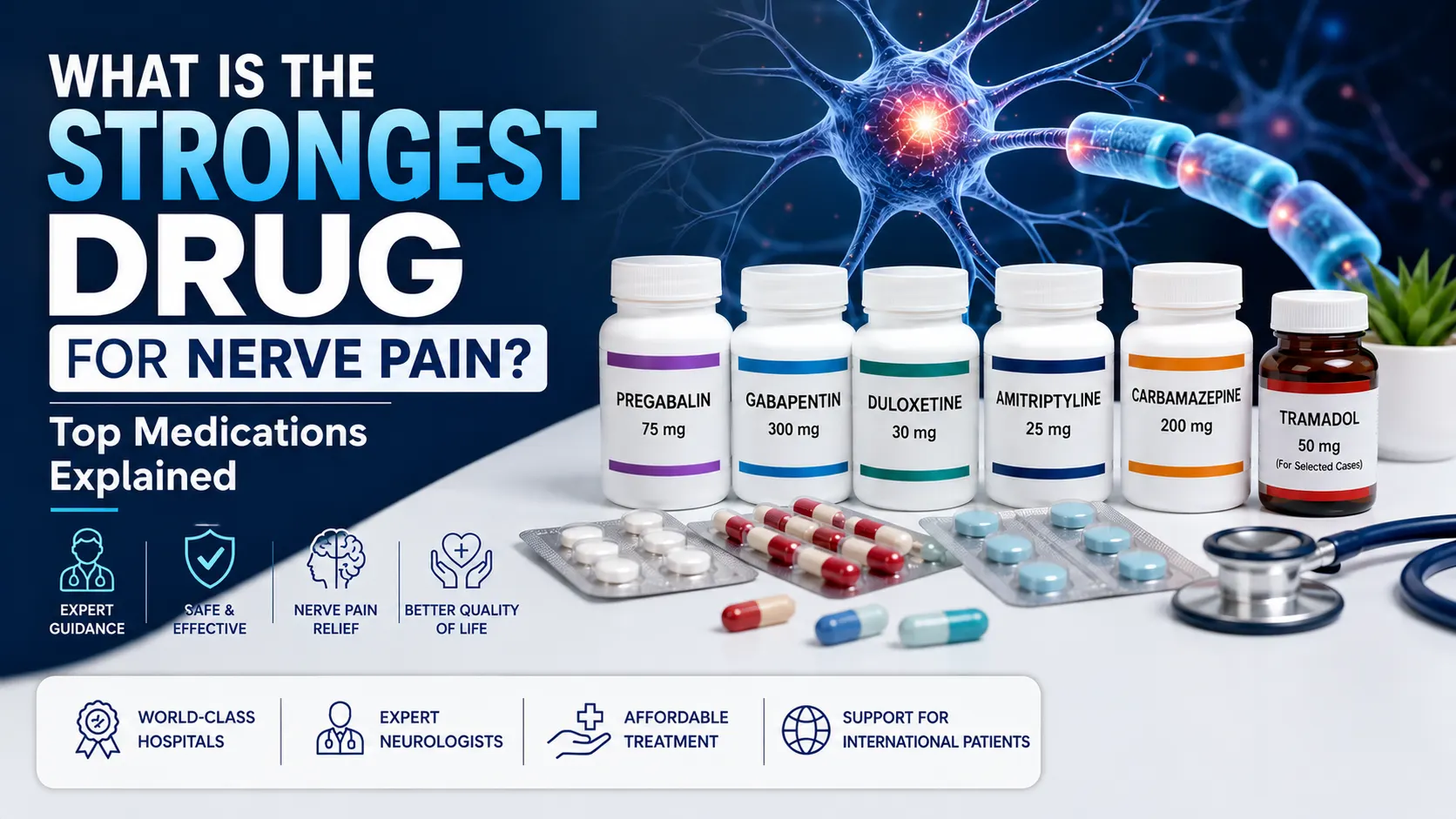
Doctors generally begin with medications supported by strong clinical evidence rather than the "strongest" drug. The goal is to maximize pain relief while minimizing side effects. Pregabalin Pregabalin is one of the most frequently prescribed medicines for neuropathic pain. It works by calming overactive nerve signals within the brain and spinal cord. It is commonly prescribed for: Diabetic neuropathy Post-herpetic neuralgia Fibromyalgia Spinal nerve pain Benefits include: Fast symptom improvement in many patients Better sleep quality Reduced burning and shooting pain Possible side effects include: Dizziness Sleepiness Weight gain Swelling of feet Gabapentin Gabapentin works similarly to Pregabalin but is often introduced gradually over several weeks. Doctors recommend it for: Peripheral neuropathy Post-surgical nerve pain Shingles-related nerve pain Common side effects include: Fatigue Drowsiness Mild coordination problems According to multiple clinical studies published in Neurology and The Lancet, both Pregabalin and Gabapentin significantly improve pain scores in appropriately selected patients. Duloxetine Duloxetine belongs to the SNRI antidepressant family but is widely prescribed for chronic nerve pain. It is especially effective in: Diabetic neuropathy Chronic musculoskeletal pain Patients experiencing both pain and depression Advantages include improved mood and pain control simultaneously. Potential side effects: Dry mouth Nausea Increased sweating Mild insomnia Amitriptyline Although originally developed as an antidepressant, Amitriptyline remains one of the most commonly recommended medicines for chronic nerve pain. Doctors often prescribe low nighttime doses because it may improve sleep while reducing nerve pain. Side effects can include: Dry mouth Constipation Sleepiness Blurred vision Older adults may require careful monitoring because of increased sensitivity to this medication.
Which Medicines Are Used for Severe or Specific Types of Nerve Pain?
Some forms of neuropathic pain require highly targeted medications. Neurologists select these drugs based on the exact condition rather than pain intensity alone. Carbamazepine Carbamazepine is considered the first-choice treatment for trigeminal neuralgia, one of the most painful nerve disorders affecting the face. Benefits include: Rapid symptom relief Excellent effectiveness for facial nerve pain Strong clinical evidence Possible side effects include: Dizziness Double vision Low sodium levels Skin reactions in susceptible individuals Oxcarbazepine Oxcarbazepine offers similar benefits with a different side-effect profile. Many neurologists prescribe it when patients experience intolerance to Carbamazepine or require long-term therapy. Tramadol Tramadol is an opioid-like pain medicine that may be prescribed only in carefully selected cases when first-line treatments fail. Doctors generally reserve it for: Severe short-term flare-ups Cancer-related neuropathic pain Complex pain syndromes requiring specialist supervision Because Tramadol carries risks of dependence, dizziness, constipation, and interactions with other medications, it should never be used without medical supervision. According to the Centers for Disease Control and Prevention (CDC), opioid medications require careful prescribing practices due to the risk of misuse and serious adverse effects.
What Causes Nerve Pain and How Is It Diagnosed?
The first step in treating nerve pain is identifying its underlying cause. Accurate diagnosis helps neurologists choose the safest and most effective medication instead of relying on stronger drugs that may not address the real problem. Neuropathic pain occurs when nerves become damaged or fail to transmit signals properly. According to the World Health Organization (WHO), neurological disorders are a major cause of disability worldwide, making early evaluation essential. Common causes of nerve pain include: Diabetes Diabetic neuropathy is among the leading causes of chronic nerve pain. Persistently high blood sugar damages peripheral nerves, particularly in the feet and legs, causing burning sensations, numbness, tingling, or stabbing pain. Shingles (Post-Herpetic Neuralgia) Some patients continue experiencing severe nerve pain long after a shingles rash has healed. This condition can last for months or even years without appropriate treatment. Spinal Disorders Herniated discs, spinal stenosis, and degenerative spine diseases can compress nerves, resulting in pain that radiates into the arms or legs. Chemotherapy-Induced Neuropathy Certain cancer treatments may damage peripheral nerves, leading to numbness, weakness, or painful tingling sensations that continue after chemotherapy ends. Traumatic Nerve Injuries Road accidents, sports injuries, surgical complications, and fractures may injure nerves directly, requiring specialist neurological assessment. To determine the exact cause, neurologists may recommend: Complete neurological examination Medical history review Blood investigations MRI or CT scan Nerve Conduction Study (NCS) Electromyography (EMG) Vitamin deficiency screening Diabetes testing According to the American Academy of Neurology, electrodiagnostic testing such as EMG and nerve conduction studies plays an important role in diagnosing many peripheral nerve disorders. Early diagnosis improves treatment success and helps prevent permanent nerve damage.
Can Lifestyle Changes and Physiotherapy Improve Nerve Pain?
Yes. Medication alone is often not enough. The best long-term outcomes usually come from combining medicines with physiotherapy, healthy lifestyle changes, and treatment of the underlying condition. Doctors commonly recommend a multidisciplinary treatment plan because neuropathic pain affects muscles, mobility, sleep, and mental well-being. Helpful lifestyle strategies include: Regular Physiotherapy A personalized physiotherapy program can: Improve flexibility Strengthen muscles Reduce stiffness Enhance balance Restore mobility Blood Sugar Control For diabetic patients, maintaining healthy blood glucose levels significantly reduces the progression of diabetic neuropathy. Balanced Nutrition Vitamin B12, Vitamin D, and folate deficiencies can contribute to nerve problems. Your doctor may recommend supplements only after confirming a deficiency. Low-Impact Exercise Walking, swimming, yoga, and stretching exercises improve circulation and help reduce chronic pain over time. Healthy Sleep Habits Poor sleep often worsens nerve pain. Maintaining a consistent sleep schedule can improve both pain perception and recovery. Stress Management Mindfulness, meditation, breathing exercises, and counseling can reduce chronic pain intensity by lowering stress-related nervous system activation. Research published by the National Institute for Health and Care Excellence (NICE) supports combining medication with rehabilitation and self-management strategies for many chronic pain conditions. Yaad rakhiye—healthy habits medicine ka replacement nahi hain, lekin treatment ko aur effective bana sakte hain.
Why Do International Patients Choose India for Neuropathy Treatment?
India has become one of the world's preferred destinations for advanced neurological care because it combines experienced specialists, internationally accredited hospitals, modern technology, and significantly lower treatment costs than many Western countries. Patients from Africa, the Middle East, Central Asia, and neighboring countries increasingly travel to India for expert diagnosis and personalized neuropathy treatment. Benefits of seeking treatment in India include: Experienced Neurologists India is home to highly qualified neurologists, neurosurgeons, pain specialists, and rehabilitation experts trained in managing complex nerve disorders. Internationally Accredited Hospitals Leading hospitals include: Apollo Hospitals Fortis Healthcare Medanta – The Medicity Max Healthcare Narayana Health All India Institute of Medical Sciences (AIIMS) Many of these institutions hold NABH and Joint Commission International (JCI) accreditations, reflecting internationally recognized standards for patient safety and quality care. Advanced Diagnostic Technology Patients benefit from: High-resolution MRI CT imaging EMG testing Nerve Conduction Studies Digital pain assessment Multidisciplinary rehabilitation programs Affordable Treatment Compared with many countries, consultation fees, diagnostic tests, medications, rehabilitation, and surgical procedures are often substantially more affordable in India while maintaining high standards of care. According to FICCI and the Ministry of Tourism, Government of India, India's medical tourism sector continues to grow due to its skilled healthcare professionals, modern hospitals, and cost-effective treatment options. Comprehensive Support Through RaFa Medi Tours RaFa Medi Tours simplifies the healthcare journey for international patients by providing: Medical visa assistance Hospital selection guidance Appointment scheduling Airport pickup and drop-off Hotel and accommodation arrangements Language interpreter services Dedicated care coordinators Follow-up support after treatment Assistance with medical records and travel planning This end-to-end support allows patients and their families to focus on recovery rather than travel logistics.
"The most effective medication for nerve pain is not necessarily the strongest one. Successful treatment begins with identifying the underlying cause and selecting a personalized combination of medication, rehabilitation, and long-term follow-up."
Comparison
Patients comparing treatment options often evaluate cost, specialist availability, waiting time, and overall patient support. India consistently stands out for providing comprehensive neurological care at competitive costs with internationally accredited hospitals.
| India | Many Western Countries | |
|---|---|---|
| Specialist Availability | Large network of experienced neurologists and multidisciplinary teams | Excellent specialists but longer waiting periods in many regions |
| Treatment Cost | Generally more affordable consultations, diagnostics, and procedures | Typically higher overall healthcare costs |
| International Patient Services | Comprehensive medical tourism support including visas, interpreters, accommodation, and travel coordination | Varies by hospital and healthcare system |
FAQ – People Also Ask
What is the strongest drug for nerve pain?
Is Pregabalin stronger than Gabapentin?
Can nerve pain be cured permanently?
When should I see a nerve pain specialist?
Why do international patients choose India for neuropathy treatment?
Can I take nerve pain medicine without a doctor's prescription?
Conclusion
Finding the answer to "What is the strongest drug for nerve pain?" is not about choosing the most powerful medication—it's about finding the right treatment for your specific condition. Accurate diagnosis, individualized medication, and a comprehensive treatment plan provide the best chance of long-term pain relief. The three key takeaways are simple: first, there is no one-size-fits-all medicine for neuropathic pain; second, medications such as Pregabalin, Gabapentin, Duloxetine, Amitriptyline, Carbamazepine, and Oxcarbazepine are prescribed based on the underlying diagnosis; and third, combining medication with physiotherapy, healthy lifestyle changes, and specialist follow-up often delivers the best outcomes. If you're considering neuropathy treatment in India, RaFa Medi Tours can help you connect with leading neurologists and internationally accredited hospitals while providing complete support—from medical visa assistance and travel planning to accommodation and post-treatment follow-up. Sahi treatment aur expert guidance se better quality of life mumkin hai.
Author & Review Information
Related Posts — Rafa Medi Tours
