
What Is the Hardest Cancer to Treat? Pancreatic, Glioblastoma & Lung Cancer
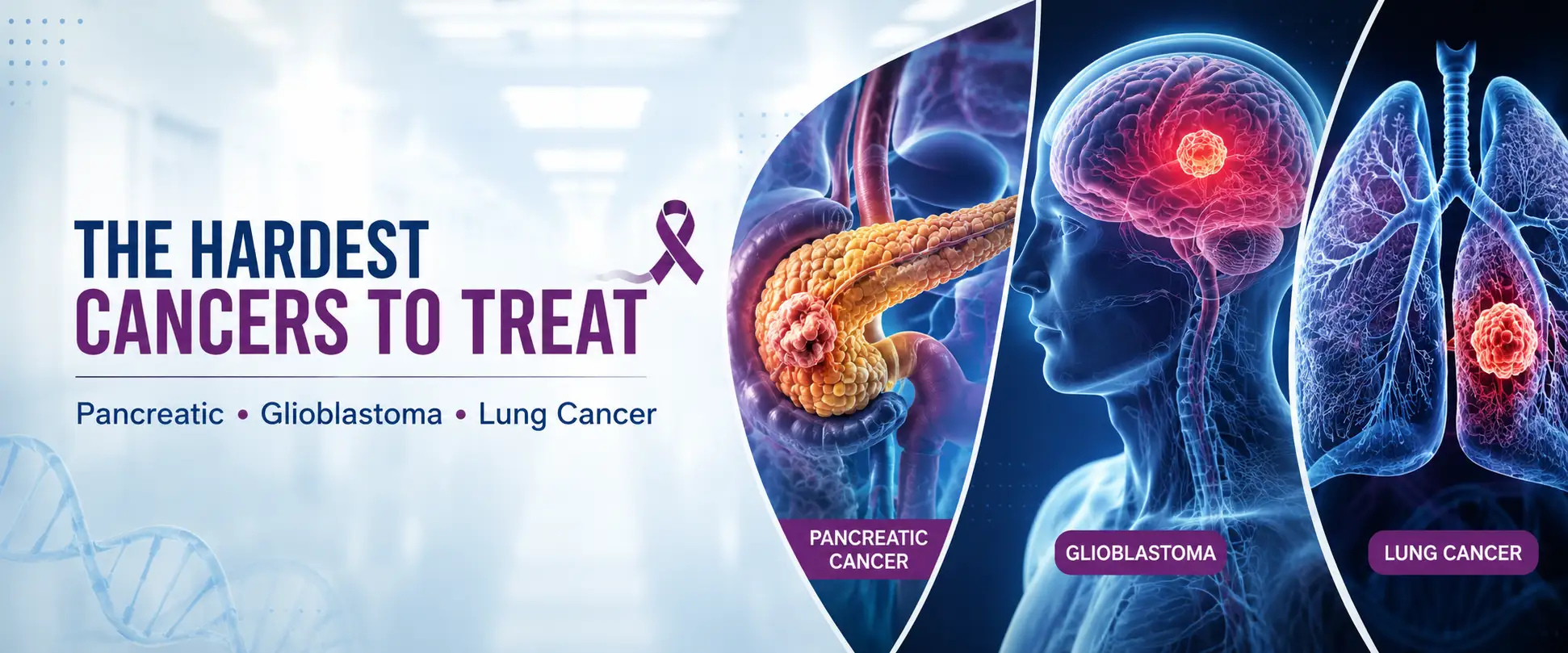
What Is the Hardest Cancer to Treat? Pancreatic, Glioblastoma & Lung Cancer
What Is the Hardest Cancer to Treat? A Realistic Look at Pancreatic, Glioblastoma, and Lung Cancer
A cancer diagnosis is one of the most difficult experiences anyone can face. While all cancers are serious, some are particularly challenging to treat due to late diagnosis, rapid growth, treatment resistance, or high recurrence rates. Among the most difficult cancers to treat are pancreatic cancer, glioblastoma, and advanced lung cancer.
Understanding why these cancers are so challenging can help patients and families make informed decisions about treatment and care.
What Makes a Cancer Difficult to Treat?
Several factors can make cancer more difficult to manage:
- Late diagnosis
- Rapid tumor growth
- Resistance to treatment
- Tumors located in critical organs
- High recurrence rates
- Limited surgical options
1. Pancreatic Cancer
Pancreatic cancer is often considered one of the hardest cancers to treat because it is usually diagnosed at an advanced stage. Early symptoms are often vague or absent, allowing the disease to spread before detection.
Why Is Pancreatic Cancer Difficult?
- Few early warning signs
- Often diagnosed after spreading
- Aggressive tumor growth
- Limited candidates for surgery
- High recurrence rates
Common Symptoms
- Abdominal pain
- Back pain
- Jaundice
- Unexplained weight loss
- Loss of appetite
- Fatigue
Treatment Options
- Surgery (Whipple Procedure)
- Chemotherapy
- Radiation Therapy
- Targeted Therapy
- Immunotherapy
2. Glioblastoma (GBM)
Glioblastoma is the most aggressive form of brain cancer. It grows rapidly and spreads into nearby brain tissue, making complete surgical removal extremely difficult.
Why Is Glioblastoma Difficult to Treat?
- Located in the brain
- Cannot always be completely removed
- Highly invasive growth pattern
- Frequently returns after treatment
- Protected by the blood-brain barrier
Common Symptoms
- Persistent headaches
- Seizures
- Memory loss
- Speech difficulties
- Vision problems
- Personality changes
Treatment Options
- Brain Surgery
- Radiation Therapy
- Chemotherapy
- Tumor Treating Fields (TTF)
- Clinical Trials
3. Lung Cancer
Lung cancer remains one of the leading causes of cancer-related deaths worldwide. Many patients are diagnosed after the disease has already spread to other organs.
Why Is Lung Cancer Difficult to Treat?
- Often diagnosed at advanced stages
- Can spread quickly to other organs
- Multiple cancer subtypes
- Treatment resistance may develop
Common Symptoms
- Persistent cough
- Chest pain
- Shortness of breath
- Coughing up blood
- Weight loss
- Fatigue
Treatment Options
- Surgery
- Chemotherapy
- Radiation Therapy
- Targeted Therapy
- Immunotherapy
Which Cancer Is the Hardest to Treat?
While every cancer case is different, pancreatic cancer and glioblastoma are often considered among the hardest cancers to treat because of their aggressive nature, limited treatment options, and high recurrence rates.
| Cancer Type | Main Challenge |
|---|---|
| Pancreatic Cancer | Late diagnosis and rapid spread |
| Glioblastoma | Cannot be fully removed and often returns |
| Lung Cancer | Often diagnosed after spreading |
| Liver Cancer | Often associated with liver damage |
| Ovarian Cancer | Symptoms often go unnoticed |
Are Treatment Outcomes Improving?
Yes. Advances in cancer care have improved outcomes for many patients. Modern treatment approaches include:
- Precision Medicine
- Genetic Testing
- Immunotherapy
- Targeted Therapy
- Robotic Surgery
- Advanced Radiation Techniques
These innovations are helping doctors provide more personalized and effective cancer treatment than ever before.
Why Early Detection Matters
Early diagnosis remains one of the most important factors in improving survival rates. Anyone experiencing persistent symptoms such as unexplained weight loss, ongoing pain, chronic cough, or neurological changes should seek medical attention promptly.
Access Advanced Cancer Care with Rafa Meditours
Rafa Meditours helps international patients connect with leading cancer specialists and advanced oncology hospitals in India. We provide support throughout the treatment journey, including hospital selection, doctor consultations, travel assistance, and post-treatment follow-up.
Conclusion
When discussing the hardest cancers to treat, pancreatic cancer, glioblastoma, and advanced lung cancer are frequently at the top of the list. Their aggressive nature, tendency for late diagnosis, and resistance to treatment make them particularly challenging. However, advances in modern oncology continue to improve treatment options and provide hope for patients around the world.
Frequently Asked Questions
What is the hardest cancer to cure?
Pancreatic cancer and glioblastoma are often considered among the hardest cancers to cure due to late diagnosis and high recurrence rates.
Is pancreatic cancer harder to treat than lung cancer?
In many cases, pancreatic cancer is considered more difficult because it is frequently diagnosed at an advanced stage and spreads quickly.
Can glioblastoma be cured?
A complete cure is rare, but treatment can help control tumor growth and improve quality of life.
Are there new treatments for difficult cancers?
Yes. Immunotherapy, targeted therapy, precision medicine, and clinical trials are creating new opportunities for patients.
Why do patients travel to India for cancer treatment?
Patients choose India for experienced oncologists, advanced hospitals, modern technologies, and affordable treatment costs.
Contact Rafa Meditours
Phone: +91 90824 04092
Email: info@rafameditours.com
Location: Mumbai, Maharashtra 400010, India
Website: https://rafameditours.com/
